Day by day
Your Kilimanjaro Itinerary
Follow the journey day by day, from your pre-climb preparation in Arusha through the changing ecological zones of Kilimanjaro, summit night and your return from the mountain. Each day is paced around safe progress, acclimatisation and the conditions your guides find on the trail.
Day 1
Arrival in Arusha or Moshi
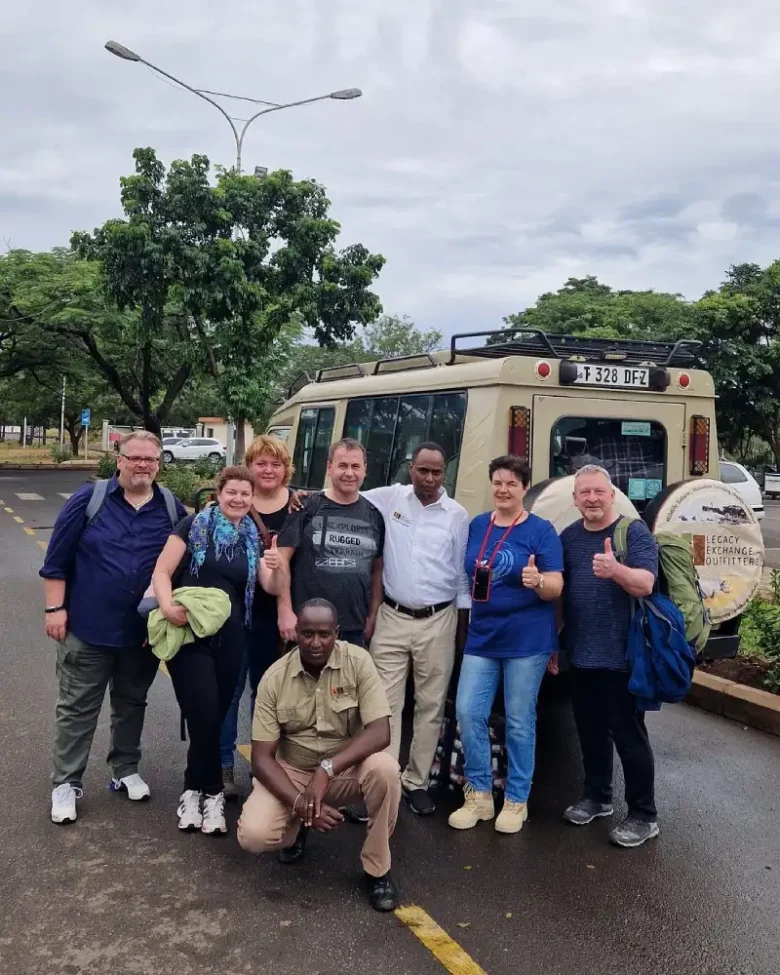
Arrive in northern Tanzania and transfer privately to your lodge. Later, meet your Legacy mountain team for a detailed climb briefing, personal gear review and discussion of pacing, hydration, altitude awareness and the days ahead. We also confirm your park paperwork, dietary requirements and personal climbing goals, and answer any last questions before departure. You will have time to organise your duffel and daypack, charge devices and get a good night’s sleep; the aim is to begin the mountain rested, prepared and clear about what each day will involve.
Stay / service: Arrival in Arusha or Moshi
Day 2
Marangu Gate to Mandara Hut
After park registration at Marangu Gate, begin walking beneath the dense montane rainforest. The trail climbs steadily through rich vegetation where colobus monkeys may be seen before reaching Mandara Hut for your first night on the mountain. Before walking, the team completes park registration, weighs crew loads and organises the equipment for the mountain. Once on the trail, your guide sets a deliberately comfortable pace with regular pauses for water, layers and photographs; lunch is taken en route or at camp depending on the day. On arrival, the crew helps you settle in, followed by a warm meal, a health check and a briefing for the following stage.
Mountain stage: Marangu Gate to Mandara Hut
Day 3
Mandara Hut to Horombo Hut
Leave the forest behind and enter open heath and moorland, with increasingly wide views of Mawenzi and Kibo. The gradual climb to Horombo Hut introduces higher altitude, so the guide keeps the pace deliberately slow and encourages frequent hydration. On Marangu, overnight accommodation is in shared mountain huts rather than tents, but the same principles of slow pacing, hydration and careful altitude monitoring apply. Your guide checks oxygen saturation and general wellbeing morning and evening, and the team uses the day’s walking profile to help you arrive at the next hut with enough energy to eat, hydrate and recover for the following stage.
Mountain stage: Mandara Hut to Horombo Hut
Day 4
Acclimatisation walk to Zebra Rocks
Spend an important acclimatisation day above Horombo. A gentle hike toward Zebra Rocks lets you gain altitude before returning lower to sleep, helping the body adjust while preserving energy for the higher stages ahead. On Marangu, overnight accommodation is in shared mountain huts rather than tents, but the same principles of slow pacing, hydration and careful altitude monitoring apply. Your guide checks oxygen saturation and general wellbeing morning and evening, and the team uses the day’s walking profile to help you arrive at the next hut with enough energy to eat, hydrate and recover for the following stage.
Mountain stage: Acclimatisation walk to Zebra Rocks
Day 5
Horombo Hut to Kibo Hut
Cross the broad alpine saddle between Mawenzi and Kibo as vegetation becomes sparse and the landscape turns high, dry and volcanic. Arrive at Kibo Hut in the afternoon, eat early and rest as much as possible before the summit attempt. On Marangu, overnight accommodation is in shared mountain huts rather than tents, but the same principles of slow pacing, hydration and careful altitude monitoring apply. Your guide checks oxygen saturation and general wellbeing morning and evening, and the team uses the day’s walking profile to help you arrive at the next hut with enough energy to eat, hydrate and recover for the following stage.
Mountain stage: Horombo Hut to Kibo Hut
Day 6
Kibo Hut to Uhuru Peak and Horombo Hut
Begin before dawn for the long ascent toward Gilman’s Point and the crater rim, then continue to Uhuru Peak at 5,895 metres if conditions and wellbeing allow. After time at the summit, descend carefully past Kibo and continue to Horombo Hut for a well-earned rest. This is the longest and most demanding stage of the itinerary, so the emphasis is on a slow, consistent rhythm rather than speed. Your guide checks how you are responding to altitude throughout the ascent and can adjust the pace or turnaround decision when necessary. After the summit photographs, the descent requires equal concentration; you return to lower elevation for food, rest and a well-earned night in thicker air.
Mountain stage: Kibo Hut to Uhuru Peak and Horombo Hut
Day 7
Horombo Hut to Marangu Gate
Descend through moorland and rainforest to Marangu Gate, where the national park formalities are completed and successful climbers receive summit certificates. Your private vehicle then returns you to the lodge for a hot shower and recovery. Before walking, the team completes park registration, weighs crew loads and organises the equipment for the mountain. Once on the trail, your guide sets a deliberately comfortable pace with regular pauses for water, layers and photographs; lunch is taken en route or at camp depending on the day. On arrival, the crew helps you settle in, followed by a warm meal, a health check and a briefing for the following stage.
Mountain stage: Horombo Hut to Marangu Gate
Day 8
Private departure transfer
Enjoy breakfast and a private transfer to Kilimanjaro International Airport or continue into a tailor-made safari, Zanzibar stay or another East African journey. Breakfast and check-out are arranged around your onward plans, and your private transfer is timed for Kilimanjaro International Airport or your next Tanzania experience. If your flight leaves later in the day, additional lodge time can be arranged where available, giving you an unhurried end to the journey.
Stay / service: Private departure transfer